

The first two weeks with a new horse follow a consistent shape: several days of settling in and quarantine, a gradual feed transition over about a week, a consistent daily routine building underneath all of it, and only then a slow return to riding, starting with walking. Trying to compress that timeline, especially the return to riding, is the most common way a new-horse transition goes sideways. Below is the sequence, stage by stage, with the point at which the schedule should bend to a vet or professional instead of continuing on plan.
Days 1-3: arrival, quarantine, and reading the horse’s stress signals
A horse arriving at a new property is dealing with a new environment, new herd dynamics if there are other horses, and often a new routine, all at once. Standard practice is to quarantine a new horse away from other horses for roughly two weeks, both to protect the existing herd from anything the new horse might be carrying and to let the new horse settle without the added stress of herd introductions. During these first few days, watch body language rather than pushing interaction: a horse that is pacing, not eating, or unusually withdrawn is telling you it has not settled yet, and that observation should shape how much you ask of it, not a fixed calendar. This is also the point in the timeline where the year-one costs described in what owning your first horse actually costs and demands, like an arrival vet-out visit, typically land. If you do not already have a vaccination and worming history from the previous owner, this is the window to arrange a vet visit to establish one.
The first week: routine, handling, and starting the feed transition
Once the horse is past the first few days of acute stress, the focus shifts to building a consistent routine: the same feeding times, the same handling sequence for catching, grooming, and picking feet, done the same way each day. Consistency matters more than any particular method here, since a predictable routine is itself part of how a horse settles into new surroundings.
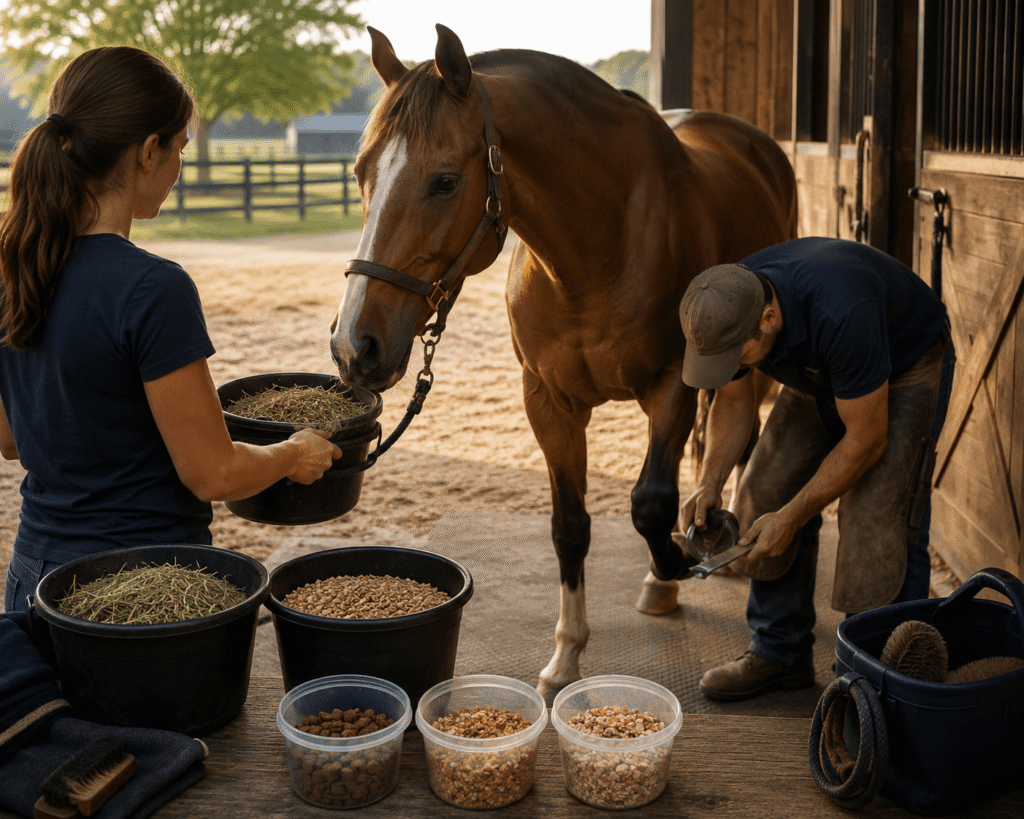
If the horse is moving onto a different hay, grain, or supplement than it had before, transition it gradually, commonly recommended over about seven days, mixing old and new feed in increasing proportions rather than switching outright, since a sudden feed change is a real risk factor for digestive upset. The hidden costs of horse ownership covers several of the costs, like an initial vet-out visit or corrective farrier work, that commonly show up in exactly this first week.
Week two: introductions to other horses and the first slow rides
If the quarantine period is complete and the horse has been cleared, herd introductions are typically done gradually, starting with adjacent turnout where horses can see and smell each other before being turned out together.
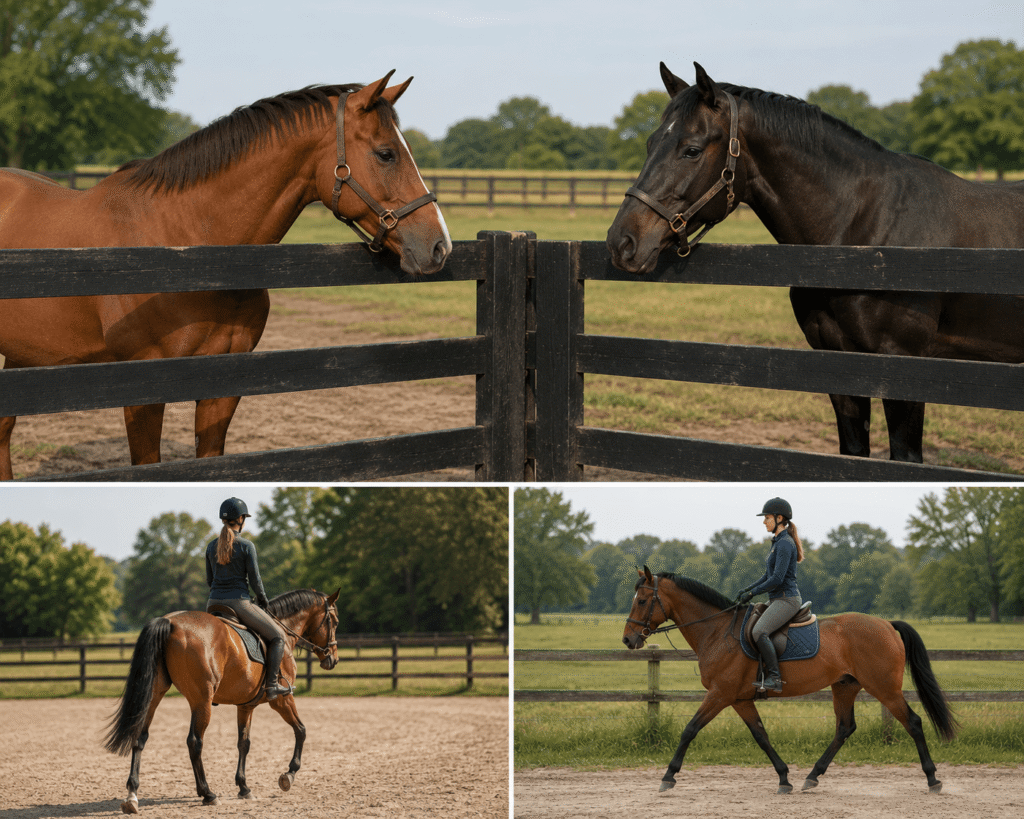
On the riding side, the common guidance is to allow one to two weeks before starting a real riding routine, and even then to start with long, relaxed walks to rebuild fitness and confidence before adding trotting, beginning with just a couple of minutes at a time and building up gradually. Canter work, if appropriate for the horse’s job, comes after the trot work is established, following the same gradual pattern. Riding every other day at first, rather than daily, is a common approach that gives the horse recovery time while conditioning builds.
When to stop and call the vet or a professional instead of following the schedule
This timeline is a default, not a fixed rule. A horse that will not settle after two weeks, that shows any sign of lameness, colic, or illness, or that reacts unpredictably to handling is a reason to pause the schedule and bring in a vet or an experienced trainer rather than pushing forward on plan. The two-week shape above assumes a horse that is healthy and settling normally; it is not a substitute for professional judgment when something looks wrong. Common mistakes buying your first horse covers a related point: a horse that seems unusually difficult to settle is sometimes a sign the pre-purchase evaluation missed something, which is worth keeping in mind rather than assuming it will simply resolve with time.
A closer look at the feed transition specifically
Feed transitions deserve more detail than “do it gradually,” because rushing this one step is a common, avoidable cause of digestive upset in an otherwise healthy new horse. A commonly recommended approach is to mix roughly a quarter of the new feed with three-quarters of the old feed for the first couple of days, moving to half and half by the middle of the week, and finishing at fully new feed by around day seven, adjusting the pace if the horse shows any looseness or discomfort along the way. Hay changes deserve the same gradual treatment as grain or supplement changes, even though hay feels like a less dramatic change; a horse’s gut microbiome adjusts to forage type over time, not instantly. Fresh water should be available throughout, and it is worth checking that a horse arriving in a new season or climate is drinking normally, since reduced water intake during a transition is an early flag worth noticing.
A simple two-week checklist
Days 1-3: quarantine, minimal handling beyond basic care, watch stress signals, arrange a vet visit if health records are incomplete. Days 4-7: establish a consistent daily routine, begin a gradual feed transition if needed. Days 8-10: begin careful herd introductions if quarantine is clear. Days 10-14: first rides, walking only, short sessions, every other day. Ongoing: gradual addition of trot work only once the horse is settled and sound.
FAQ
Can I ride on day one?
It is not commonly recommended. Standard guidance allows one to two weeks for a new horse to settle before starting a real riding routine, though a very brief, calm assessment ride on arrival is sometimes done to check basic responsiveness, not to begin training.
How do I know if quarantine is even necessary?
If the new horse’s full health and vaccination history is unknown, or if it will be turned out with other horses, quarantine is the standard precaution. If you have a complete, verified health record and no other horses on the property, the strict two-week isolation matters less, though basic settling time still applies.
What if the horse won’t settle at all?
Persistent pacing, refusal to eat, or ongoing distress beyond the first several days is a signal to involve a vet or an experienced trainer rather than waiting it out, since it can indicate either a health issue or a mismatch that a schedule alone will not fix.
Should I change the horse’s feed at all if it seems to be doing fine on what it’s already eating?
Not necessarily. If the previous feed is available and suitable, keeping it unchanged for the first couple of weeks removes one variable from an already stressful transition. Feed changes are usually driven by necessity, such as the previous feed no longer being available, rather than being a required step in every transition.
Guidance in this piece reflects commonly recommended quarantine, feed-transition, and conditioning practices from equine care and veterinary sources, not a single first-hand account. The timeline above is a default starting point; the horse’s own behavior in front of you, not the calendar, is always the better guide to how quickly to move.